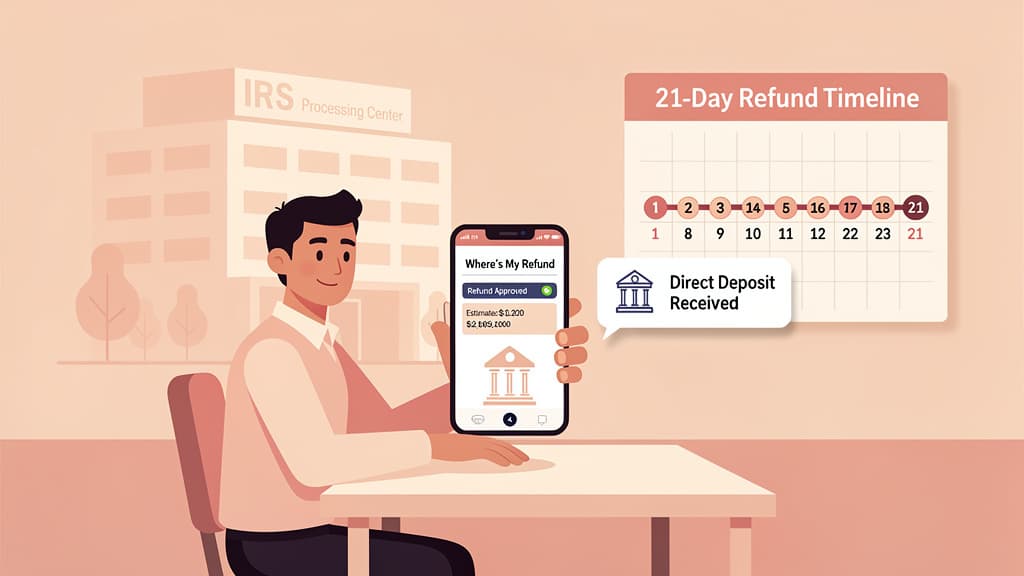
The IRS issues most e-filed refunds in less than 21 days, and that timeline holds in July 2026 just as it did during the spring filing season. If you filed months ago and your refund never arrived, start with Where's My Refund; if it has been more than 21 days since e-filing (6 weeks for paper), call the IRS at 800-829-1040. If you amended your return, plan on 8 to 12 weeks of processing, and in some cases up to 16 weeks.
Key takeaways:
- Refund never arrived? Track it at Where's My Refund (updates once daily, overnight). Escalate only after 21 days for e-file or 6 weeks for paper; if the IRS can't resolve it, the Taxpayer Advocate Service is at 877-777-4778.
- Under review (CP05 notice)? The IRS can hold your refund for up to 60 days from the notice date, and calling before then won't speed it up.
- Amended return (Form 1040-X)? Allow 8–12 weeks, up to 16 in some cases. Track it at Where's My Amended Return starting about 3 weeks after you file.
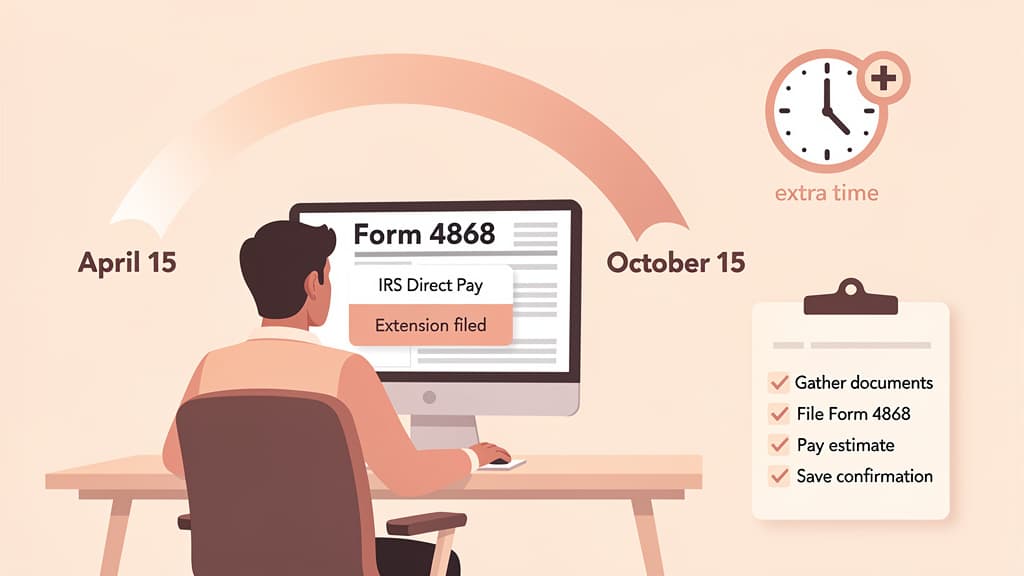
- Filed an extension? E-file with direct deposit still pays out in about 21 days year-round. Your deadline is October 15, 2026.
- IRS running late? Past roughly 45 days after the April 15 deadline (or your filing date, if later), the IRS owes you interest on the refund: 7% in Q3 2026, compounded daily.
A clean e-filed return with direct deposit pays out in about 21 days; paper filing stretches that to 6–8 weeks or longer. Here is the full picture by filing and refund method.
| Filing Method | Refund Method | Estimated Refund Timeline |
|---|
| E-file | Direct deposit | ~21 days |
| E-file | Mailed check | ~1 month |
| Paper file | Direct deposit | 6–8 weeks |
| Paper file | Mailed check | 2–3 months |
| EITC/ACTC returns | Any method | Held until mid-February each season (PATH Act) |
| Amended return (Form 1040-X) | Any method | 8–12 weeks, up to 16 |
Legal basis: IRC §6402, PATH Act §201

The 2026 filing season ran from January 26 (when the IRS began accepting returns) through April 15, 2026, so the early rows of this refund calendar are now history. The table still matters for two groups: extension filers can read the May–October rows for what to expect right now, and the same week-by-week pattern repeats every season. The IRS benchmark behind it is unchanged: most electronically filed returns are processed within 21 days.
| If You File By... | IRS Receives Return | Expected Refund By... |
|---|
| January 26 (filing season opened) | Late January | Mid-to-late February |
| February 1 | Early February | Late February |
| February 15 | Mid-February | Early-to-mid March |
| March 1 | Early March | Late March |
| March 15 | Mid-March | Early April |
| April 1 | Early April | Late April |
| April 15 (deadline) | Mid-April | Early-to-mid May |
| May 1 (with extension) | Early May | Late May |
| June 1 (with extension) | Early June | Late June |
| October 15 (extension deadline) | Mid-October | Early November |
These dates assume a clean return with no errors, no identity verification holds, and no review flags. Paper returns add 4–6 weeks to every timeline above.
- The IRS typically opens e-filing in late January. Returns filed before that date are queued and processed once the season opens.
- Refunds issued later in the filing season (April onward) may actually process faster because IRS systems are under less load.
- Weekends and bank holidays can shift the actual deposit date by 1–2 business days.
If your return claimed the Earned Income Tax Credit (EITC) or the Additional Child Tax Credit (ACTC) this season, federal law required the IRS to hold your entire refund, not just the credit portion, until mid-February 2026. That hold is long over: the IRS said most EITC/ACTC refunds would reach bank accounts by March 2, 2026. If your refund still hasn't arrived in July, the PATH Act is not the reason — check "Where's My Refund" and the delay factors below.
The Protecting Americans from Tax Hikes (PATH) Act of 2015 gives the IRS more time to verify income and prevent fraudulent refund claims. Under this law, in every filing season:
- Returns claiming EITC or ACTC filed in January or early February do not receive refunds before mid-to-late February, regardless of how early they were submitted.
- The IRS holds the entire refund amount, not just the EITC/ACTC portion. If your total refund is $5,000 and $2,000 is from EITC, the full $5,000 is held.
- After the hold is released, normal 21-day processing applies.
| Filing Date | Expected Refund (E-File + Direct Deposit) |
|---|
| January 26–February 14 | Late February to first week of March |
| February 15–28 | Mid-March |
| March 1+ | Normal 21-day processing (no PATH Act delay) |
The same hold will apply again next season: EITC/ACTC returns filed in January or early February 2027 won't see refunds before mid-February 2027. Filing on opening day versus February 10 makes no difference to the refund date.
The answer to "where is my refund?" lives in one place: the free IRS "Where's My Refund?" tool at irs.gov/refunds, which works year-round and covers the current tax year plus the two prior years. It shows the status of your return in three stages.
- Return Received — The IRS has your return and is processing it
- Refund Approved — The IRS has finished processing and approved your refund amount
- Refund Sent — The refund has been sent to your bank or a check has been mailed
- Online: irs.gov/refunds (available 24/7)
- Mobile: IRS2Go app (iOS and Android)
- Phone: 1-800-829-1954 (automated refund hotline)
- E-filed returns: Status appears within 24 hours of the IRS accepting your return
- Paper returns: Status appears approximately 4 weeks after you mail your return
You'll need three pieces of information to check: your Social Security number (or ITIN), your filing status, and the exact refund amount shown on your return.
The tool updates once per day, usually overnight. Checking multiple times per day won't show new information.
While the IRS processes most e-filed returns in 21 days, several factors can extend that timeline significantly.
Simple mistakes are the most common cause of delays. Wrong Social Security numbers, math errors, missing forms, or mismatched income figures (your W-2 doesn't match what's in the IRS system) will trigger a manual review. The IRS will send you a notice explaining the error and what's needed to resolve it. This can add weeks or months to your refund timeline.
If the IRS suspects someone else filed a return using your identity, you'll receive Letter 5071C asking you to verify your identity. You can verify online at idverify.irs.gov or by calling the number on the letter. Until verification is complete, your refund is frozen. This process typically adds 2–4 weeks if handled promptly, but can take longer if you need to verify by phone during peak call volumes.
If the IRS sends you Notice CP05 ("We're holding your refund until we finish reviewing your tax return"), it can hold your refund for up to 60 days from the notice date, and the IRS asks you not to call before those 60 days have passed. If the review isn't finished by then, the IRS may send a CP05A requesting documents, which adds more waiting time; at that point the Taxpayer Advocate Service (877-777-4778) can step in.
Why reviews happen: the IRS pulls returns when deductions, credits, or reported withholding look unusual relative to income, or when your figures don't match W-2s and 1099s filed by employers and payers. This is a screening process, not a full audit. On your IRS account transcript, code 810 marks a refund freeze and code 811 means the freeze was removed and your refund is released.
An amended return (Form 1040-X) generally takes 8 to 12 weeks to process, and in some cases up to 16 weeks, per current IRS guidance. Track it with the separate Where's My Amended Return tool; your amended return appears there about 3 weeks after you file, and the tool covers the current tax year and up to 3 prior years.
Two rules worth knowing before you amend:
- E-filing is limited to recent years. You can e-file Form 1040-X only for the current or two prior tax periods (as of mid-2026, that means tax years 2023–2025). Older amendments must go on paper, which is slower.
- Refund claims expire. Under IRC §6511 you generally have 3 years from the original return's due date to claim a refund. The window for 2022 refunds closed on April 15, 2026, so a 2022 amendment filed now can fix errors but usually cannot produce a refund. For tax year 2023, the deadline is April 15, 2027.
If you file a joint return and your spouse has outstanding debts that could trigger a refund offset, you can file Form 8379 to protect your share of the refund. However, processing injured spouse claims adds approximately 11–14 weeks to the refund timeline.
Paper returns are processed entirely by hand — opened, sorted, data-entered, and reviewed by IRS employees. This adds 4–6 weeks compared to electronic filing, and the timeline can stretch further during peak filing season when the IRS receives the highest volume of paper returns.
Direct deposit is the fastest way to receive your refund. The IRS sends the funds electronically to your bank, and most banks make the deposit available within 1–5 business days after the IRS issues it.
- You can split your refund into up to three accounts using Form 8888 (checking, savings, or retirement accounts)
- The account must be in your name (or your spouse's name for joint returns)
- Some banks and credit unions make refund deposits available 1–2 days early if they recognize the IRS deposit
- If you enter the wrong account number, the bank will reject the deposit and the IRS will issue a paper check instead — adding weeks to your timeline
- The IRS will not deposit more than three electronic refunds into a single bank account. If a fourth refund is directed to the same account, the IRS issues a paper check
Once "Where's My Refund" shows "Refund Sent," the timeline depends on your chosen method:
| Refund Method | Time After IRS Sends |
|---|
| Direct deposit | 1–5 business days |
| Mailed check | 1–2 weeks (varies by location) |
The IRS can reduce (offset) your refund to cover certain outstanding debts. This is handled by the Bureau of the Fiscal Service (BFS), not the IRS itself.
- Past-due federal taxes — Unpaid taxes from prior years
- Past-due state taxes — Your state can request a federal refund offset
- Child support — Court-ordered child support arrears
- Federal student loans — Defaulted federal student loan debt
- Other federal debts — Overpayments from federal agencies
If your refund is offset, BFS will send you a notice explaining how much was taken and which agency received the funds. If you filed jointly and the offset applies to only one spouse's debt, the other spouse can file Form 8379 (Injured Spouse Allocation) to recover their portion.
You can check whether you have debts subject to offset by calling BFS at 1-800-304-3107.
-
Check "Where's My Refund" at irs.gov/refunds. This is the most reliable and up-to-date source. Update your expectations based on the status shown.
-
Wait the appropriate processing period. Don't contact the IRS until:
- 21 days after e-filing
- 6 weeks after mailing a paper return
- 16 weeks after filing an amended return (Form 1040-X)
-
Call the IRS. If your refund hasn't arrived after the processing period, call 1-800-829-1040. Have your return information ready (SSN, filing status, refund amount, filing date).
-
Contact the Taxpayer Advocate Service (TAS). If your refund is more than 30 days past the expected date and the IRS hasn't resolved the issue, you can request help from TAS by calling 1-877-777-4778 or visiting taxpayeradvocate.irs.gov. TAS is an independent organization within the IRS that helps taxpayers resolve problems.
-
Check for IRS notices. Review your mail and your IRS online account for any correspondence. The IRS may have sent a letter requesting additional information, and your refund is on hold until you respond.
Yes. The IRS gets about 45 days of "administrative time" to issue your refund without owing anything; past that, it pays interest on the overpayment. Interest accrues from the later of the return due date (April 15, 2026 this season), the date the IRS received a late-filed return, or the date the return arrived in processable form. So if you filed by the deadline and your refund is still unpaid in July, interest has been building since roughly the end of May.
The overpayment rate for individuals is set quarterly and compounds daily. For 2026: 7% in Q1, 6% in Q2, and 7% in Q3 (July 1 through September 30). The interest arrives automatically with the refund; you don't apply for it. One catch: refund interest is taxable income, and the IRS sends Form 1099-INT for the following filing season if it pays you $10 or more.
| Scenario | Filing Method | Expected Refund Timeline |
|---|
| Simple W-2 return, no credits | E-file + direct deposit | 2–3 weeks |
| W-2 return claiming EITC, filed January | E-file + direct deposit | Late February–early March |
| Self-employed, Schedule C | E-file + direct deposit | 2–3 weeks |
| Return with identity verification hold | E-file + direct deposit | 4–8 weeks |
| Paper-filed return, no issues | Direct deposit | 6–8 weeks |
| Paper-filed return, no issues | Mailed check | 8–12 weeks |
| Amended return (Form 1040-X) | E-file | 8–12 weeks, up to 16 |
| Return with refund offset | E-file + direct deposit | 2–3 weeks (reduced amount) |
| Return selected for review | E-file + direct deposit | 6–12 weeks |
Paper filing adds 4–6 weeks to your refund timeline under the best circumstances. The IRS processes over 90% of returns electronically, and the infrastructure for paper returns is significantly slower. Unless you have a specific reason that prevents e-filing, always file electronically.
If you enter an incorrect routing number or account number for direct deposit, the deposit will either go to the wrong account or be rejected by the bank. If rejected, the IRS issues a paper check — adding weeks to your wait. If the deposit goes to the wrong account, recovering the funds becomes your responsibility to resolve with the bank. The IRS cannot redirect or recall a direct deposit once it's been sent.
The IRS phone representatives use the same system that powers the "Where's My Refund" tool. If the tool shows your return is still being processed, a phone call won't yield different information. You'll wait on hold (sometimes for over an hour during peak season) to hear the same status you could have checked online in 30 seconds. Save the phone call for when the tool indicates a problem or your processing window has passed.
Many taxpayers rush to file in late January to get their refund quickly, not realizing that the PATH Act requires the IRS to hold all EITC and ACTC refunds until mid-February. In the 2026 season, filing on January 26 versus February 10 produced the same refund date. There's no speed advantage to filing early if your return claims these credits.
The wait for a refund is stressful partly because of uncertainty — you're not sure exactly how much is coming or when. Jupid eliminates the guessing by tracking your income and deductions throughout the year, so you have a clear picture of your tax situation before you ever file.
Jupid connects to your bank accounts and automatically categorizes transactions with 95.9% accuracy. By the time filing season arrives, you already know your approximate refund amount based on actual income, withholding, and deductions — not estimates from a calculator that asks you to remember numbers from memory.
Through Jupid's WhatsApp and iMessage AI, you can ask "What's my estimated refund?" at any point during the year and get an answer based on your real financial data. No logging into a portal, no spreadsheets, no guessing. It works through the web interface, Claude Code, and other AI tools.
Knowing your expected refund amount also helps you spot errors on your filed return. If your actual refund differs significantly from what Jupid projected, that's a signal to review your return for mistakes before the IRS flags them.
Connect your bank to Jupid and know your refund before you file.
- IRC §6402 — Authority to offset refunds against outstanding liabilities
- PATH Act §201 — Requirement to hold EITC/ACTC refunds until February 15
- IRC §6511 — Limitations on refund claims (3-year filing window)
- IRC §6611 — Interest on overpayments (the 45-day rule)
- IRS Publication 17 — Your Federal Income Tax (general filing guidance)
| Item | Value |
|---|
| Average individual refund | ~$3,000 |
| E-file processing time | ~21 days |
| Paper return processing time | 6–8 weeks |
| Amended return processing time | 8–12 weeks (up to 16) |
| PATH Act refund hold | Until mid-February (each season) |
| IRS interest on late refunds | 7% Q3 2026, after ~45 days |
| Extension filing deadline | October 15, 2026 |
| Max direct deposit accounts | 3 per return |
| Standard deduction (single, 2025 returns) | $15,750 |
| Tax brackets | See full guide |
The fastest path to your refund is straightforward: e-file as early as possible, choose direct deposit, and make sure your return is accurate. For most filers, that means money in your account within three weeks of filing.
If you claim EITC or ACTC, the PATH Act adds a mandatory hold until mid-February — filing early won't change that timeline. And if you file on paper, expect to wait at least six to eight weeks, often longer.
The best thing you can do while waiting is resist the urge to call the IRS before the processing window closes. Use "Where's My Refund" to track your status, and only escalate if the tool shows an issue or the expected timeline has passed.
Disclaimer
This article provides general information about IRS refund processing times for the 2026 filing season (tax year 2025 returns) and should not be considered tax advice. Actual refund timelines vary based on individual circumstances, return complexity, and IRS processing volumes. The IRS does not guarantee specific refund dates. For advice specific to your situation, consult with a qualified tax professional or visit irs.gov.
Filing Season: 2026 (tax year 2025 returns)
Last Updated: July 11, 2026